

 March 8, 2026
 3 min read


1. Introduction: the quiet strength of the Ji-Liang pattern
In Zi Wei Dou Shu, the Tian Ji + Tian Liang conjunction in the Chen and Xu palaces is traditionally called the Ji-Liang strategic pattern.
It sounds like a military phrase, but its real essence is not aggression. It is the ability to stay clear in complexity and make decisions that are both flexible and responsible.
- Tian Ji brings speed, observation, and adaptive thinking.
- Tian Liang brings principles, perspective, and risk buffering.
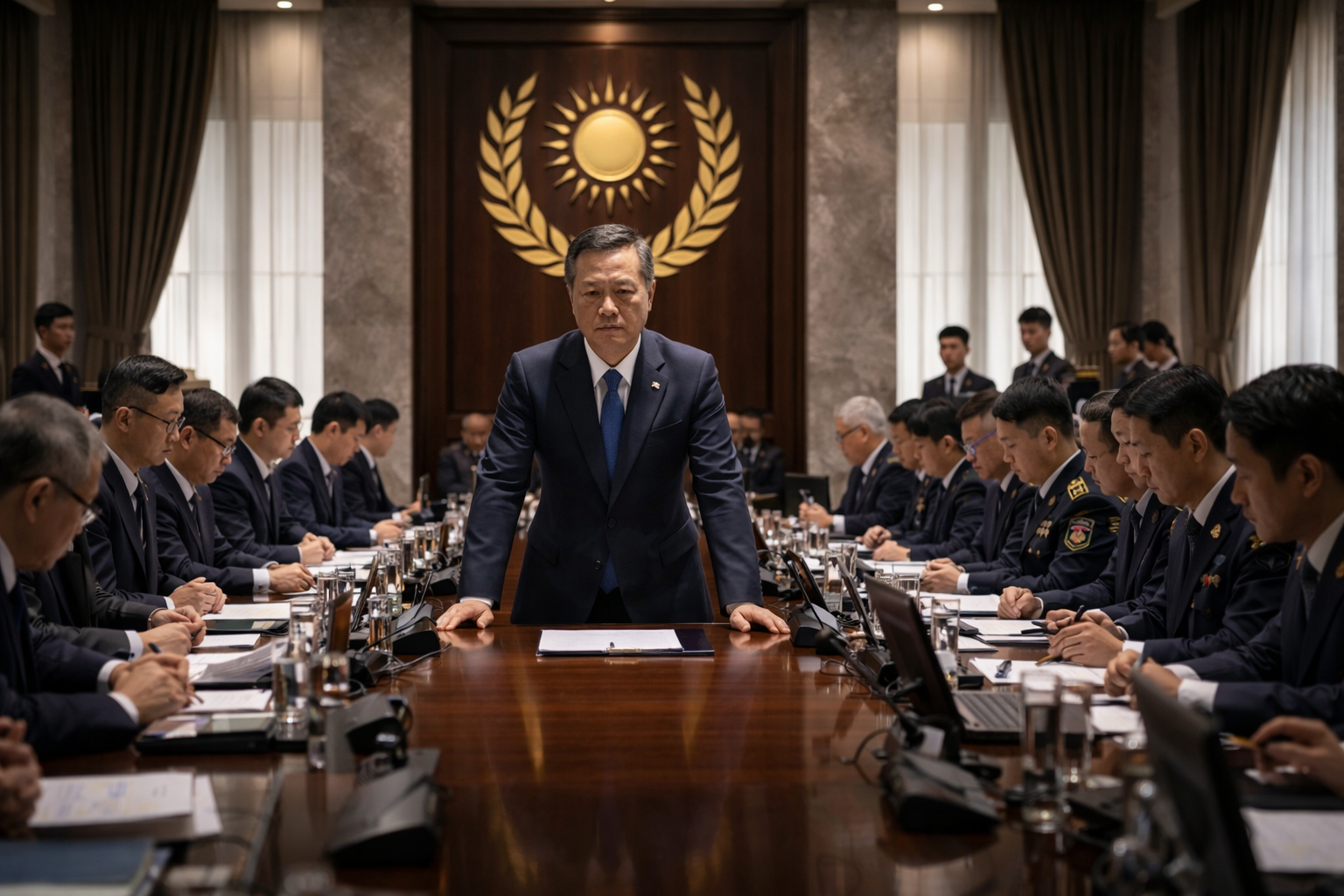
Together, they create a person who may not be the loudest in the room, but is often the one who can restore order when things get messy.
2. Star essence: flexibility meets principle
Tian Ji: fast and precise, but easy to overload
Tian Ji excels at scanning options and optimizing routes. It does not cling to one rigid answer.
But under high pressure, Tian Ji can become overactive:
- too many simulations, delayed execution,
- too much risk awareness, too little commitment,
- high sensitivity to changing signals.
Tian Liang: steady, ethical, and protective
Tian Liang is not just “kind.” It is principled kindness.
It sets boundaries, absorbs shock, and keeps choices aligned with long-term consequences. This helps the Ji-Liang pattern avoid drifting into clever but unstable decisions.
3. Psychological style: calm strategist, not cold operator
A common Ji-Liang workflow is:
analyze first, act second; reduce risk first, pursue speed second.
Typical strengths include:
- quickly identifying key variables,
- avoiding impulsive conclusions,
- giving practical advice with calm tone and solid logic.
In teams, this pattern often becomes the stabilizer:
- when others panic, it structures priorities,
- when information is noisy, it builds a decision frame,
- when conflict rises, it searches for workable middle ground.
The main pitfall is over-worry. Too much internal simulation can create mental fatigue. The correction is simple: return to Tian Liang rhythm, ground in the present step, then move forward.
4. Palace spectrum: Chen vs Xu
Chen palace: inspiration and strategic output
In Chen, Ji-Liang often appears as idea-driven strategy:
- strong in teaching, consulting, planning, and cross-domain integration,
- fast at turning abstract concepts into practical methods,
- recognized for thought leadership.
Xu palace: order, governance, and accountability
In Xu, Ji-Liang tends to be stronger in systems and safeguards:
- reliable in process control, risk review, and operational standards,
- attentive to fairness, boundaries, and sustainability,
- trusted in pressure-heavy environments.
The core in both palaces is the same: organizing order out of complexity.
5. Practical guidance for Ji-Liang charts
- Accept change, but define non-negotiables first.
- Use principles as navigation, not as self-imposed rigidity.
- Convert ideas into small actions early; execution reduces anxiety.
- Protect your nervous system with rest routines and recovery windows.
Mature Ji-Liang is not about being right all the time. It is about knowing when to move fast, when to hold steady, and how to keep both in balance.
6. Closing
Tian Ji + Tian Liang is the signature of a warm strategist: clear-minded, measured, and quietly reliable.
If your mind feels overloaded and every option feels heavy, start by clarifying the next move.


 Personality structure