1) Introduction: System Positioning of the Finale Mission
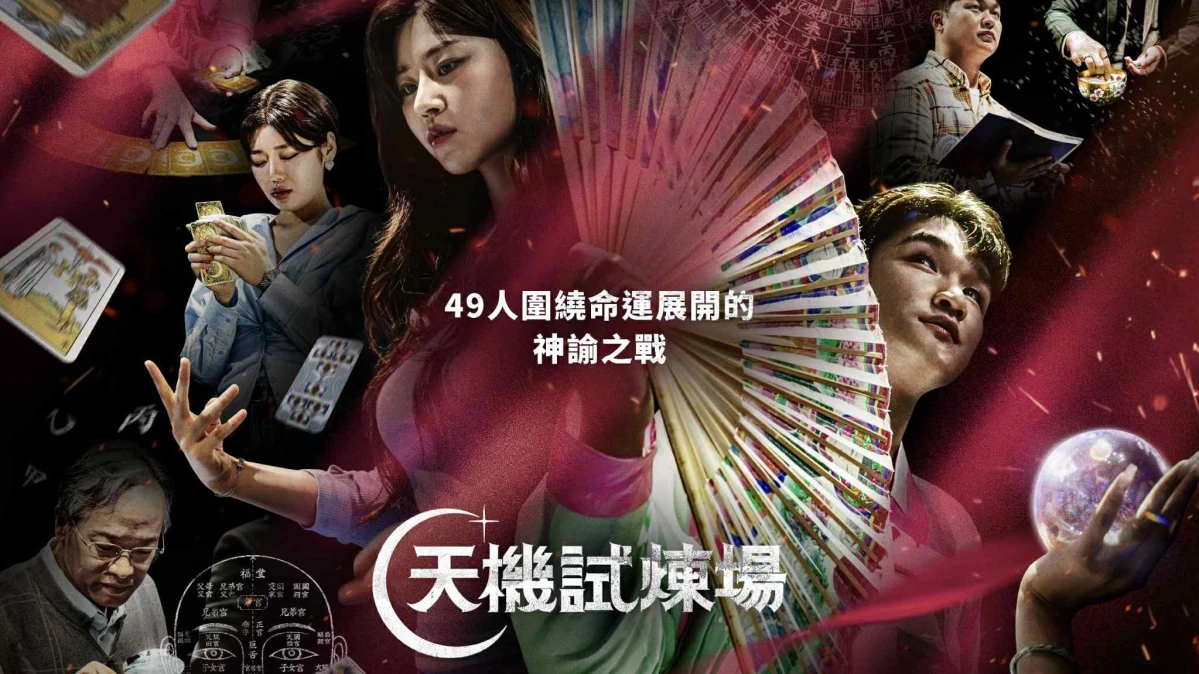
The Korean metaphysical reality show Battle of Fates aired its finale on March 4, 2026. The final mission, “Soul Duel,” asked contestants to communicate with spirits, soothe the emotional wounds of the living, and conduct a ritual for the dead.
The three finalists, Seolhwa, Lee So-bin, and Yoon Dae-man, were all Korean shamans (Mudang). In the featured case, a client surnamed Cho was trapped in severe guilt after her sister died from a fall, and feared the family was being punished because she did not inherit the ancestral calling.
During the session, she showed extreme physical and psychological reactions: facial tension, shaking, and abrupt voice shifts. Beyond entertainment framing, the episode revealed a core social function in Korean spiritual culture: ritualized processing of unresolved grief and relational rupture.
2) Core Logic of Korean Spirit Release: Dissolving Han and Completing Passage
In Korean animistic belief, death is not absolute termination but a transition. If the dead carry unresolved grievance, fear, sudden-death shock, or attachment to the living, this can condense into Han (한), a dense emotional residue.
Korean-style spirit release is not simply expulsion. Its center is soothing + reconciliation + passage:
- giving the dead a final channel to be acknowledged,
- giving the living a way to externalize guilt and anger,
- allowing both sides to complete unfinished emotional contracts.
So, culturally and psychologically, the ritual is an emotional conversion system, not just a supernatural spectacle.
3) Ritual Mechanics: How Gut Works
In Korea, spirit-soothing and transition rites are broadly called Gut (굿). Depending on region and lineage, three representative structures are often discussed.
1. Ssitgimgut (씻김굿) — Cleansing Rite
Strongly associated with Jeolla traditions and recognized as intangible cultural heritage. The symbolic action is “washing”: ritual water, scent, and tools are used to cleanse objects representing the dead.
Functionally, this is a purification protocol: remove psychic “noise,” reduce emotional contamination, and prepare the spirit for transition.
2. Jinogwigut (진오귀굿) — Consolation/Guidance Rite
Common in Seoul and central regions, often performed by spirit-descended shamans. The shaman acts as a medium-channel, allowing communication between the dead and living through speech, crying patterns, and embodied rhythm.
In the finale case, the client’s intense reaction can be interpreted in two ways: in spiritual language, strong field interference; in clinical language, breakthrough of trauma under high arousal conditions.
3. Cheondoje (천도재) — Buddhist Transfer Rite
Cheondoje emphasizes chanting, offerings, and merit transfer. Compared with high-intensity Gut catharsis, it works more like a stable, long-cycle guidance model that helps release attachment.
Many modern Korean families combine Gut and Cheondoje: first discharge emotional pressure, then support long-term settling.
4) Psychological Logic: Dynamic Balance Between Living and Dead
The key question is not whether “a spirit appeared,” but whether the living person can exit frozen grief.
In prolonged self-blame, three loops are common:
- guilt loop: total self-attribution of tragedy,
- unfinished bond: no final goodbye, no closure language,
- meaning collapse: inability to place the event in a coherent life narrative.
Ritual provides a socially legitimate high-intensity container. Inside that container, unspeakable pain becomes symbolic signal; the person can then internalize a new structure: “I am forgiven,” or “I can continue to live.”
That is why these rites process not only the dead, but also the living person’s agency and world-stability.
5) Conclusion: A Cultural Device for Rebuilding Order in Chaos
Although Battle of Fates is packaged as competitive entertainment, its finale exposed a deeper Korean death-and-grief coping model.
Korean spirit-release and Gut practices are not merely superstition labels. They act as a social-psychological recovery framework:
- acknowledging human helplessness before death,
- providing procedural channels for unbearable affect,
- restoring symbolic boundaries between life and death.
When the dead are guided onward and the living can finally loosen their attachment, ritual becomes a practical technology of recovery. That is why these practices remain socially relevant in highly modernized Korea.
