Recently, a South Korean metaphysical variety show "Tianji Trial Field" featuring wizards and fortune tellers has triggered a phenomenon-level discussion on the Internet. In the show, young wizards who dress in modern clothes and even look like idol stars demonstrate their chilling "psychic" and predictive abilities in front of the camera.
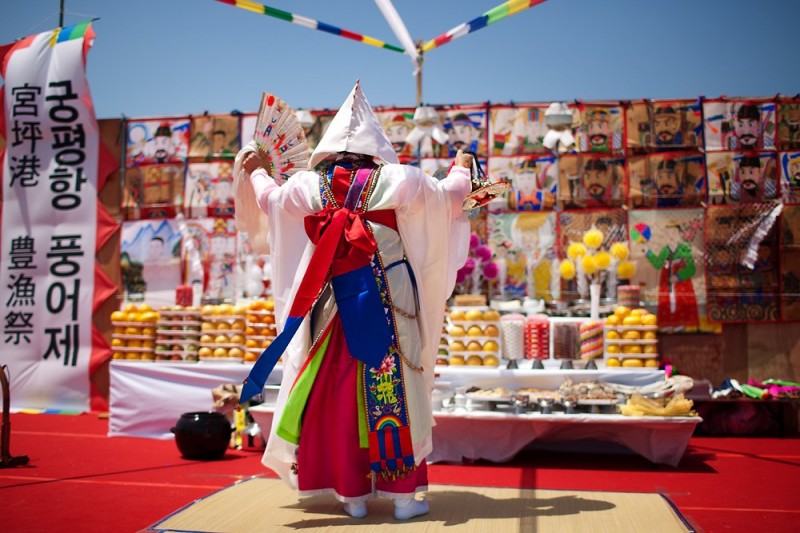
When they shook the sacred bells, waved folding fans, and even suddenly switched to children's voices to speak, many viewers were shocked and became extremely curious about Korea's unique and mysterious "Muism (무속신앙)".
In the program, we often hear several specific titles: "Wan Shen", "Tong Disciple", and "Dao Ling". What kind of laws of operation of the spiritual world are hidden behind these words? What are the essential differences between the Korean "divine shaman" and the I Ching and Ziwei Dou Shu that we are familiar with? Today we are going to unveil this mystery.
The Birth of a Korean Shaman: Painful Illnesses and Seance Ritual
To understand Korean wizards (Mudang, 무당), you first need to know how they gain their abilities. Unlike traditional Chinese numerologists who study the "Book of Changes" and "Yuan Hai Zi Ping" and other classics, the vast majority of shamans in South Korea are "divine shamans".
Their abilities are not learned, but "chosen by the gods."
Before becoming shamans, these people usually experience a serious illness that cannot be explained by modern medicine, which is called "miraculous disease (신병)" in Korea. Patients may experience auditory hallucinations, hallucinations, extreme pain, and even near-death experiences. The only antidote is to accept the call of the gods, hold a "divine ceremony (내림굿)", and officially let the gods possess you and become the spokesperson of the gods in the world.
This is why in "Tianji Trial Field", the wizards' predictions often do not require complex planning, but directly rely on "seeing", "hearing" or "intuition after being possessed by gods" to give fatally accurate answers.
Deconstructing the mysterious titles in the show: Wan Shen, Tong Disciple, Dao Ling
In Korean shamanism, the system of gods is very complex, and shamans worship and "please surrender" to different gods. The three common titles in the show actually represent three completely different spirits and divination styles.
1. Manshin (만신): Lord of the gods, the highest honorific title for wizards
In Korean, "Manshin" literally means "ten thousand gods." This is not a specific god, but an honorific title for a high-level witch with extremely high qualifications, powerful magic, and the ability to communicate with and control multiple gods.
To be called a pantheon of gods, the wizard usually has undergone countless sinister sacrifices (Gut / 굿) and possesses extremely high spiritual power and social status. When a pantheon of gods divines for you, there is a huge brain trust of gods standing behind her, and the guidance she gives is often more authoritative and macroscopic.
2. Dongja (동자): a child spirit with no taboos
This is the most impressive and even a bit hairy state in the show. When a wizard invites a "child disciple (child god)" to possess him, his voice will suddenly become high-pitched and shrill, his behavior will be like that of a five- or six-year-old child, and he will even ask for candy and toys.
The divination characteristics of child disciples: Children do not have social baggage and sophistication. Therefore, the predictions given by Tong disciples are usually extremely direct, to the point, and even aggressive. They will expose the secrets or lies hidden in the querent's heart without mercy, and their accuracy is astonishingly high.
3. Doryeong (도령): an elegant and sharp unmarried nobleman
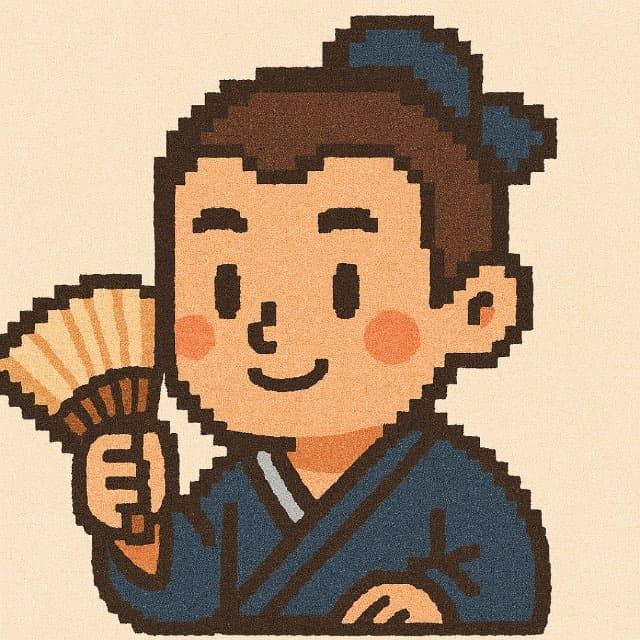
"Doryeong" in Korean tradition refers to an unmarried young aristocratic son in ancient times. When a wizard is possessed by a Taoist order, his temperament will instantly change, becoming dignified, arrogant, and bookish; some wizards will also habitually pick up traditional folding fans.
The divination characteristics of Daoling: Because he was regarded as a noble or scholar during his lifetime, Daoling was very good at answering questions about fame, academic studies, career promotion, lawsuits, etc. The advice they give is often logical, clear and condescending.
Korean witchcraft vs Eastern Yili: sensing gods, or deducing the universe?
After watching "Tianji Trial Field", many people will ask: Is the Korean wizard more accurate, or the Chinese I Ching and Zi Wei Dou Shu?
In fact, these are two completely different operating systems:
Korean wizard (seduction): relies on spiritual induction
This is a process of "receiving messages". The accuracy can be very high, but it is also highly dependent on the wizard's current mental state and the will of the gods. Its essence is mysticism, which you can choose to believe, but the verifiable logic behind it is difficult to trace.
I Ching and Ziwei Dou Shu: Reliance on the Algorithm of the Universe
This is a set of mathematical and energy models that have been proven for thousands of years. We do not rely on the possession of ghosts and gods, but through your birth time (Zi Wei) or current thoughts (I Ching), we bring life into the huge formula composed of yin and yang, five elements, heavenly stems and earthly branches.
Its essence is environmental and energy data analysis, and every result is traceable. What the wizard gives you is the "absolute picture"; what the Yi Jing and Zi Wei Dou Shu give you is the "energy flow" and "the choice of how to seek good fortune and avoid misfortune through your own actions."
To seek secrets, you don’t have to go to South Korea
"Tianji Trial Ground" became a hit because it touches on the core anxiety of modern people in an era of high uncertainty: We all long for a sense of certainty. Whether we are feeling confused or at a career crossroads, we all hope to have a power beyond ordinary people to guide us.
However, you don’t need to experience painful illnesses or travel to Korea to find the gods.
In Purplestarmapper, we input ancient Eastern metaphysics classics into the most advanced AI deep computing model, eliminate human emotional interference and mysterious fears, and provide you with calm, accurate and implementable destiny navigation.
👉 Experience now: your exclusive AI I Ching / Ziwei identification ➔
Whether you want to see through the outcome of a relationship (like the sharpness of a child disciple), or plan for career upgrades next year (like the actuarial calculations of Daoling), Purplestarmapper can give you a more in-depth decoding.
🎁 Exclusive mobile privileges for readers:
- Depth Layout Special: Enter code
LIVE50OFFat checkout to receive 50% off advanced appraisals.
The trial of destiny is not in a TV show, but in your daily real life. Master the compass and you are the master of your own destiny.
Purplestarmapper Note: Metaphysics is a tool to help us see the situation clearly, and the magic that ultimately changes your destiny is always hidden in your next actions.
